
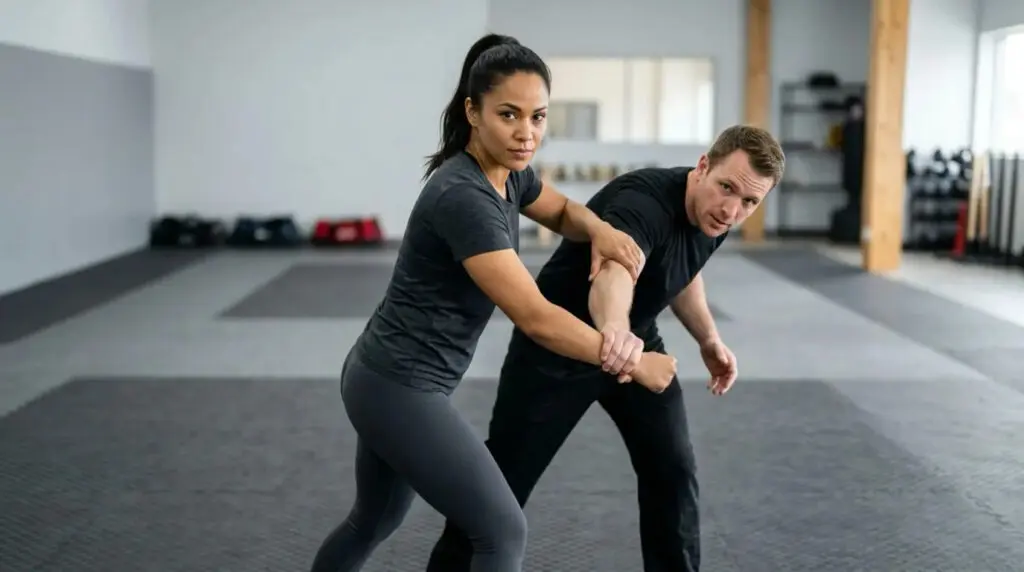
Self defense situational awareness starts with noticing what is happening around us before a situation has the chance to become a problem. Personal safety often depends on simple habits, such as putting the phone down, staying aware of who is nearby, and paying attention when something feels out of place.
Phones, headphones, busy schedules, and familiar routines can pull our attention away from changes in our environment. The goal is not to become suspicious of everyone or move through life in fear.
Instead, we can build calm awareness habits that give us more time to think, create space, and choose a safer response.
What Is Self Defense Situational Awareness?
Self defense situational awareness means paying attention to people, spaces, sounds, movement, and changes in the environment. When we notice those details early, we often have more options than we would if we were caught completely off guard.
This practical skill does not require special equipment. It starts with being present and noticing what is normal for the setting.
Practicing Self Defense Situational Awareness Before Physical Action
Awareness comes before physical action because early information creates choices. We may decide to move away, change direction, step closer to other people, or leave an area entirely.
Distance can provide more time to assess what is happening and decide whether a situation requires action. Physical techniques can be valuable, but good awareness supports prevention and better decision making before a confrontation develops.

Why Situational Awareness Matters in Self Defense
Awareness is one of the most practical self defense skills beginners can develop. It does not depend on strength, speed, or athletic ability, but it does require consistent attention.
Recognizing a possible problem early may give us time to leave, ask for help, change our route, or move toward a safer area.
Personal Safety Awareness Without Constant Fear
Personal safety awareness should feel calm rather than exhausting. The goal is to notice meaningful changes without assuming every unfamiliar person or unexpected movement is a threat.
If behavior, distance, tone, or movement seems unusual, we can pay closer attention and give ourselves more space. Trusting discomfort does not mean reacting aggressively; it means allowing ourselves to make a safer choice sooner.
Self Defense Awareness Skills for Everyday Situations
We use self defense awareness skills in ordinary places such as stores, parking lots, sidewalks, workplaces, and public transportation. These are environments where distraction is common and simple awareness can make a meaningful difference.
A steady scan can help us notice exits, obstacles, people moving unusually close, or changes in tone and body language.
What Beginners Can Notice in Public Spaces
Useful details to notice include:
- Locate the nearest exits
- Watch for someone entering your personal space
- Observe changes in tone, posture, or body language
- Identify obstacles that could make it harder to leave
- Notice areas with better lighting or more people nearby
- Limit moments when a phone or headphones reduce awareness
These observations are simple, but they become more useful with repetition.
Simple Awareness Habits Beginners Can Practice
Building awareness habits does not require a special training environment. We can practice during routines we already have, such as entering a store, walking to a car, or waiting for public transportation.
Small habits repeated consistently can improve awareness while helping us stay calm before anything feels urgent.
Exits, Distance, and Body Language
Begin with a few practical habits:
- Identify at least one exit when entering an unfamiliar space
- Keep a comfortable distance from people you do not know
- Put your phone away when moving through busy or unfamiliar areas
- Notice who is approaching or standing unusually close
- Pay attention to sudden changes in voice, posture, or movement
- Trust discomfort enough to create space or leave
These habits are not about expecting the worst. They are about giving ourselves options.
Structured self defense classes can help beginners practice awareness, distance, communication, and decision making in realistic but controlled situations.
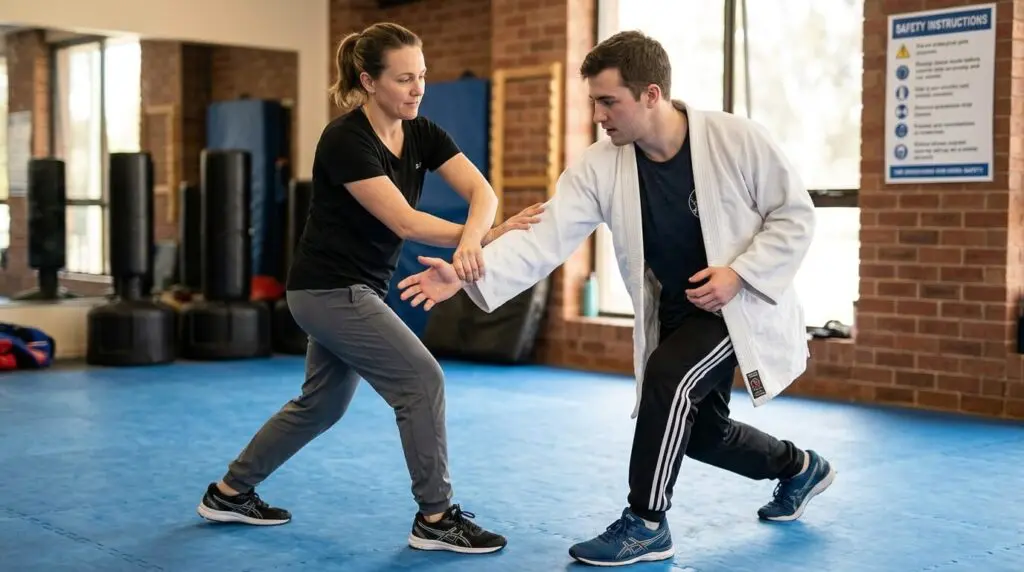
How Safety Decision Making Supports Better Self Defense
Safety decision making becomes easier when we notice a concern early enough to stay calm. Instead of reacting at the last second, we can compare options and choose the one that creates the most safety.
Leaving is often the simplest response. Creating distance, moving toward other people, changing direction, or asking for assistance may prevent a confrontation.
Creating Distance and Choosing an Exit
Distance gives us time. If a person or situation makes us uncomfortable, increasing space can reduce pressure and make it easier to think.
An available exit is just as important. We should notice where we can move safely instead of waiting until a tense situation leaves us with fewer choices.
Self defense situational awareness is most useful when it helps us recognize those options early. If leaving is possible, avoiding unnecessary conflict is often the safer choice.
Common Self Defense Awareness Mistakes
Distraction is one of the most common awareness mistakes. Looking at a phone while walking through a parking lot or wearing loud headphones in an unfamiliar area can narrow attention.
Tunnel vision is another problem. Focusing only on one person or concern may cause us to miss what is happening elsewhere.
Other common mistakes include:
- Ignoring discomfort because we do not want to seem rude
- Standing too close during a tense interaction
- Assuming familiar places are automatically risk-free
- Overreacting to ordinary behavior
- Forgetting to notice exits or obstacles
- Believing awareness requires constant anxiety
Balanced awareness means staying observant without becoming fearful.

Building Situational Awareness Into Your Self Defense Basics
Awareness fits naturally into a broader framework of self defense basics because it supports prevention before physical action is needed. Physical skills are harder to use effectively if we do not notice a problem until it is already close.
Simple drills can help. When entering a coffee shop, identify the exits before ordering, or while walking outside, notice how much space you have between yourself and the people around you.
Practicing these skills can make awareness feel more automatic over time.
Start Building Your Awareness Skills Today
Self defense situational awareness becomes stronger through small, repeated choices. We can begin by looking up more often, noticing exits, maintaining comfortable distance, and paying attention when a situation suddenly changes.
Practice one habit at a time during normal routines. That might mean putting the phone away while walking to the car, identifying exits when entering a building, or noticing how people use space during everyday conversations.
Good awareness should support confidence, not fear. When we stay present and give ourselves permission to create distance or leave, we build a practical foundation for safer decisions every day.


